Sunday, March 31, 2013

To the aspiring scientists out there

Tomorrow I start the job I have been working towards for the past 15 years and I have been dreaming of since middle school. I always wanted to be a scientist and when I first joined a lab as an undergrad, I decided I wanted to run my own lab. I have had wonderful times and truly terrible times, when I have teetered on the edge of dropping out of college to man the cashier at a supermarket, dropping out of grad school to go write movies or just simply hide under a rock, leaving my postdoc to go work as a scientific consultant in finance or a policy advisor. For years every day I would wake up and think "Will I quit today?", and then I would chose my job as an aspiring academic scientist above anything else. Every day.
And then, as I was interviewing for positions, something snapped into place. I truly loved the interview process. I loved talking to people about science all day, sharing my work, developing my scientific program and most of all, I loved the image of my lab which was forming in my head. Kind if when you imagine the face of your future baby and you are filled with joy. One day I was ogling the different scientific positions LinkedIn was throwing my way and the next I was set on a course to start plotting all my R01s.
I can honestly say that since getting my job I have had the best year of my life. Hiring people, buying equipment, shaping my thinking as a leader, networking like crazy have all been fascinating and exciting. It was that wonderful time when you are still protected in your postdoc lab, blessed with lots of my own funding to spend, and trying things out with training wheels. A time when you can enjoy and imagine what is coming without really worrying about it.
Tomorrow the training wheels come off. Tomorrow we begin to worry. Starting tomorrow I have 3 years to come up with substantial NIH funding and the clock starts ticking to March 31 2016. Considering how fast these past 6 months have flown, and that setting up everything in the lab may take another 6-9 months, and that I'm trying to finish three papers, and that there are multiple grants due this summer, the future is uncertain. Yet, I'm still excited and hopeful and happy to start this adventure. I am living my dream. At the same time, I have a lot of grad school friends who have not chosen this career and have gone to do a lot of fascinating things in other professions. And that comforts me, because I see that they are happy and successful, and if the NIH continues with this crazy run and funding doesn't come, I will be okay no matter what.
So, to you, aspiring scientists out there, most of all learn to believe in yourselves. Figure out what you want to do in life and plan for it, develop it, grow into it. A job, any job rarely falls in your lap, no matter if it's in academia or outside. In the lab look for your anchor, the one place or one experiment that makes everything alright, no matter what (for me it's at the microscope, looking at cells; I have friends who clone when they are stressed...go figure). My anchor tells me that I need to be there and nowhere else. And finally, if you do something you really enjoy, it will come through when you talk to people about it and maybe they will see how cool it is. So far this transition is great fun, more fun than I ever thought it would be, so know that there is light at the end of the tunnel.

Saturday, March 23, 2013

You need an assistant, but don't have one: apps for travel and organization

Nowadays sometimes there is so much to do, that I don't have the time to think, let alone get organized in my life. There are days when I would really love to have an assistant. Since I do not have the money for an assistant, while trying to keep it all together, I looked for the next best thing....apps and websites.

When I travel my new best friend is Tripit (http://www.tripit.com). It checks your email for you for trip reservations (flights, hotels, buses, you name it) and nicely organizes everything. It even calculates the trip between the airport and your hotel and maps it for you. You can input the location of meetings and it will show you where those are also and it will tell you by when you need to check out of the hotel to get to the airport on time. The smartphone and iPad apps are great and have all information you need right at your fingertips, so that you don't have to fish around for pieces of paper or email to figure out where you are going. If you need to coordinate with other people you can just email Tripit their plans and it will include them. I'm moderately addicted to the Stats where you can keep track of miles traveled and cities visited. I logged more than 60,000 miles last year.

When I'm looking for the best and cheapest options for flights, I just discovered Hipmunk (www.hipmunk.com), a great site with a very nice visual interface organizing flights based on price, stops, times or "agony", which is a fun algorithm computing stops, layovers and price and deciding which flight would be less painful for you. On shorter routes, it even inserts the Amtrak timetable and price so that you can decide whether a train would be preferable. Then to watch fares, I still use Yapta (http://www.yapta.com), which I have used for years as it was recommended by multiple travel sites. You pick the flight and the airlines you want and then you watch them. Every time the price drops you get an email, and after you purchase the site still tracks the flight for refunds in case the price drops even more.

For conference expenses, I discovered ExpenseCloud (https://www.expensecloud.com), a site (and apps) to keep track for all receipts. You email registrations and travel receipts to the website and upload pictures of any random receipt on your smartphone and the site organizes a report. If you are in a company that actually uses ExpenseCloud then you would just need to send it out for approval, but even having all the numbers together in a neat report without having to organize and find all the receipts is really helpful.

Finally for everything else there is TaskRabbit (https://www.TaskRabbit.com) where you can pay someone to do stuff for you: go get your groceries, help you find a new apartment, bake cookies, organize your bills, you name it. You post your task and your target price or let people make a bid, and you'll likely have a host of TaskRabbits ready to work for you. Virtual tasks are available from everywhere, in person tasks are only in New York, Boston, LA, SF Bay Area, Portland OR, Chicago, Seattle, Austin and San Antonio. One friend was wondering whether they'll count synapses...I haven't asked, yet.

Hope this helps some overworked scientists.

Image: By Aaron Logan (from http://www.lightmatter.net/gallery/albums.php), via Wikimedia Commons

Saturday, March 16, 2013

You can't succeed in science without mentors

Mentors are necessary for any type of career development (Where would you go if nobody recognized your talents and cultivated them?), but even more so in science where you need people to believe in you, give you money to develop your own ideas, trust your judgement and abilities, pretty much starting from the day you step into a lab as an undergraduate. A lot of effort is put by the NIH and other institutions to  have Mentored Career Development awards like the K99, K01, etc (see links, here), however mentoring is not uniform across laboratories and it is completely dependent on the Principal Investigator (PI). When you write a mentoring plan for one if these grants you have to describe a Utopian situation in which you constantly meet with your PI who will steadily guide you every step of the way through your projects, your papers and your career. In reality things can be quite different: your PI may not have time, may not be guiding type or only have insight on some aspects of what you do, and in the worst case scenario may actually undermine you. I have had my ups and downs, but I have been lucky (or picky) to have the mentors I needed for me at every step of my career. I've heard horror stories and wonderful stories from others.

I think the important thing is to always looks for mentors and to realize how important mentoring is. I know that people say that women always underestimate their own abilities and give credit to their circumstances without extolling their own achievements, BUT mentors were incredibly important in shaping my career trajectory. Every mentor had strengths and weaknesses, but there were multiple other mentors around me (colleagues, friends, other professors) I could rely on. While setting up my Individual Development Plan (myIDP, here), not only I had to think who my mentors are, but what they are for and it was a very interesting exercise. Instead of putting the burden of "full service" mentoring on only one person, it may be more effective to identify what each mentor is good at and use multiple mentors for all your needs. For example, a mentor for a specific part of a project, a mentor for departmental diplomacy, a mentor for grant writing, etc. As part of my K99 application I was requested to establish a Job Search Advisory Committee, a group of PIs young and older who would help me in shaping my application and navigate the interview process. Everyone of them contributed in a very important yet different way and I was a real eye-opener. Anyone can be a mentor even if just for 10 minutes, so started just asking any PI I meet for a piece or two of advice on how to set up a lab and got lots of great info.

The thing is that you will always need mentors: you will need letters from people for the rest of your life, for every career development grant application, for your tenure, for your promotion to full professor, for awards. My advice to graduate students is always that you should find at least a very strong mentor in your career, someone who will be there for you and support you and promote you and talk you off ledges whenever necessary. Having a good mentor makes your life much easier, but a lot of mentors are even better.

Friday, March 8, 2013

On the fear of branching out into a new field

This has been an exciting and emotional week. I am venturing into a new field in biology and I decided to attend a small specialized conference on the topic. I am still trying to determine in my head which projects are going to be the best bets for the new lab and I thought I could look for collaborators to help me branch out.

It is always difficult to go to a conference on your own, but it is even harder to go to a conference in a field you do not know where you know absolutely no one. I am no shrinking violet, but the constant level of attention you need to maintain and the pleasantness can be exhausting. You are trying to figure out who the leaders in the field are, who the movers and shakers are and which topics are trending, while trying to understand exactly what everyone is talking about. I'm at the top of my game with genetics and cell biology, but here surrounded by biochemists, structural biologists and biophysicists I often found myself smiling an empty smile. It had been a long time since I had felt this ignorant...

Overall, I think it went exceptionally well, I was kind of adopted by the best possible collaborators, I was invited to give several talks, I was made privy to interesting unpublished ideas and plans which will help me with directing my projects, yet I feel tired and deflated, and completely out of my depth.
It is easy to do what we know, to feel confident of our expertise, and after you spend so many years to become an expert, it can be daunting to feel like a rookie again. Yet, in chatting with established investigators and asking for advice as I usually do, a picked up a new piece of wisdom: "Don't be afraid to branch out to a topic you don't know". At dinner with one of the movers and shakers I was trying to meet, he told me about his career path and how being at the right place with the right expertise can make you able to answer very exciting questions in a new field.

I guess I have to take this advice and tell myself that I can now rely on people who have the expertise to help me. I need to build on the very valuable contacts I have made during this week.

Image credit: The road not taken by Harvey Robinson via Wikimedia Commons

Saturday, March 2, 2013

Pros and cons of new K99/R00 regulations

Lat month the NIH announced some changes to the K99/R00 Pathway to Independence Award guidelines (NOT-OD-13-034), as a results of recommendations of the Biomedical Workforce Task Force. A major change is the lowering of the deadline for application from 5 years from obtaining your PhD to 4 years, which has been very upsetting to many. The Task Force was composed of several deans, department chairs and university presidents (roster) and their goal was to "develop a model for a sustainable and diverse U.S. biomedical research workforce that can inform decisions about training the optimal number of people for the appropriate types of positions".  A recent blog post from Sally Rockey, the NIH Deputy Director for Extramural Funding, also a member of the Task Force, discusses the impetus behind the deadline reduction: the goal is to emphasize mentoring, promote earlier exit from the postdoc and it is supposed to be accompanied by an increase in the number of awards to achieve a 30% success rate (here). The problem is how this is going to be implemented.

As I was applying for my K99 3 years ago, I chatted with people who had served on study sections and heard that there was widespread confusion on how to judge these awards. In going through an initial submission and resubmission and discussing with other awardees, it was clear that you pretty much had to be able to go on the job market right away. You had to provide a plan for your job search and your overall goals for your lab and you had to assemble a Job Search Advisory Committee. There was still substantial emphasis on mentoring, since you had to justify why you needed 2 more years of training, but the idea is that now mentoring will be even more important. But considering that an application with a resubmission takes one year, the timing becomes critical. You basically have to figure out what you want to write in your application during the 2nd year if your postdoc, apply at the beginning of your 3rd year and if necessary resubmit 6 months later. This is a tall order since most people do not have a well defined project until later in their postdoc and do not necessarily have a project that they can take with them. If you change fields and do a postdoc on a different topic from your PhD you may still be learning in year 2. If you are making a mouse line, you'll be at the beginning of characterization with no clear idea of what to write about. So you are left with abandoning the idea of a resubmission and just putting all your eggs in one basket applying only once. In addition, there is the issue of penalizing fellows who decide to take on a high risk project and develop new techniques, who may be troubleshooting for a few years before a big break.

I personally thought that the K99 was timed perfectly, kicking in when the early fellowships were ending and providing a cushion for the last 1-2 years of postdoctoral work. I had several friends who were blindsided by the 5 year deadline and could not make it on time despite having very exciting projects in development. I was able to take an additional year after securing my position to finish up a paper and I have been able to use the money for some really cool and pretty expensive experiments which will build the basis of the first couple of years in my own lab. It has been a huge blessing and I am a little scared for the transition to the new guidelines. I am trying to make sure all the younger postdocs know that they have to start thinking about this right away...it is just very hard when the first year is often spent reading and starting and stopping multiple possible projects.

Saturday, February 23, 2013

Where do you find grant money for your lab?

As a young principal investigator (PI) you have to find money wherever you can. In addition you have to start thinking for places for your lab peeps to look for funding also. This is in no shape or form a comprehensive list, but they are places that have helped me stay funded during my postdoc and places where I have been trolling for grants as a starting investigator. I work on the genetics of neurodevelopmental disorders so the funding sources are skewed towards my interests, but a lot of info is available on the NIH website (http://health.nih.gov/). Just look for the disease or organ you are interested in and each page will have a list of foundations and patient organizations relevant to the disease. Also remember the Career Development Awards (K Awards) from the NIH which you can obtain during your postdoc and transfer to your new institution: the K99/R00 Transition to Independence Award which I discussed in previous posts (here and here), and the Mentored Career Development Awards, K01 for PhDs and K08 for physician scientists.

Note: as I pick up information along the way, I have started a parallel post with helpful dates on the timelines for the foundation grants which vary widely, since it can be useful for planning when to write them. I will populate it as I go along, so please do not hesitate to post your experience on some of the other grants.

Career development awards:
Other government grants:
Foundation grants:
Fellowship resources:
  • post-doctoral fellowships for European postdocs:
     2. Human Frontiers Science Program: http://www.hfsp.org/funding/postdoctoral-fellowships
     3. Marie Curie Global Fellowships: 2 year abroad and 1 year back in home country
  • pre-doctoral fellowships:
  1. NIH NRSA fellowships: http://grants.nih.gov/training/F_files_nrsa.htm
  2. NSF Graduate Research fellowship: https://www.fastlane.nsf.gov/grfp/Login.do
  3. HHMI international student fellowship: http://www.hhmi.org/grants/individuals/intl_fellows.html
  4. Ford Foundation Diversity fellowships: http://sites.nationalacademies.org/pga/fordfellowships/
Hope this helps and please leave a comment if you have any suggestions.

Picture credit: By Victor Dubreuil (Private collection) [Public domain], via Wikimedia Commons

Sunday, February 17, 2013

Are you a manager or a leader in the lab? What is the difference and how to make the jump

I guess that if you went to business school management jargon and strategy would become second nature, but as a scientist you are not trained either to manage or to lead people, and when you start your lab you are thrown into the lion's den to fend for yourself. You are asked to develop a nationally and internationally recognized research program which will lead to amazing breakthroughs and revolutionize your field. You are given money to hire people and buy equipment and shape your lab as you please. You have to define your identity and can finally make your voice heard to assert your opinion on scientific, administrative and policy issues. But how to navigate the transition? Apparently it is not easy for anyone, even in business, and it was the topic of feature in the Harvard Business Review in June 2012, How Managers Become Leaders (here).

The author, Michael Watkins, who's a leadership development consultant, identifies 7 behavioral shifts, which he defines as no less than "seismic". I like the word since it implies the buildup to a traumatic break followed by a slow adjustment, but I hope that the process is not as destructive as the crash of two tectonic plates. I tried to adapt the 7 seismic shifts for scientist and since they deceptively sound very similar, I pointed out what I thought he meant needed to be done to achieve them.

SPECIALIST TO GENERALIST: You have to go from knowing everything in your project to knowing a little bit of everything. As your responsibilities expand you cannot keep track of every single detail, but still have to be able to understand where everyone in the lab is going and guide multiple individual projects. Action: learn a bit of everything.

ANALYST TO INTEGRATOR: As a followup to knowing a bit of everything, you have to know where everyone's work fits in the greater scheme of things. You learned how to eviscerate a problem in detail, but now you have to teach others to do that, so that you can focus on the big stuff. Action: guide how the different projects and people in the lab fit together.

PROBLEM SOLVER TO AGENDA SETTER: Which means that you shouldn't sweat the small stuff any more, but let other people solve problems for you, while you orchestrate the direction of the lab (see a former post on unloading some of your problems). Action: delegate and spend more time on defining goals for employees to meet according to the lab priorities.

BRICKLAYER TO ARCHITECT: So what are the priorities? I like the concept of going from a bricklayer building a wall to an architect designing a building, because while you have to know the basics of construction, as an architect you have to develop a vision. A vision for what you want your building to look like, how you want it to fit in its surroundings and what it will look like in 100 years. As the lab architect the PI must assemble the parts according to a blueprint and move in the direction of her/his ideal lab. Action: develop a vision for the lab.

TACTICIAN TO STRATEGIST: This is similar to "problem solver to agenda setter" but has a much broader scope. If you have a far reaching vision, how do you get there? You have to stop thinking in term of tactics (this experiment will lead to that experiment) and develop a strategy about the direction of your field and how you want different projects in the lab to contribute to it. Action: think long term about the implications of the work and move towards your vision.

WARRIOR TO DIPLOMAT: You know how to get what you want, how to hoard the right reagents, how to put your foot down for equipment time. You have learned to navigate the quirks of your current lab and you have found your niche. If you have students/techs working for you, you know how to command them. As a professor and leader, the forces pulling you from left to right will multiply, you'll need to work with superiors, colleagues and collaborators, you'll need to manage post-docs with their own ideas and agendas, you'll need to balance the time devoted to teaching and service. Everyone above you and below you will have to work towards the goal of making your lab run smoothly and of advancing your career. Action: listen to what everyone has to say and find a good compromise.

SUPPORTING CAST MEMBER TO LEAD ROLE: Being a lead in a movie or a play may sound like a dream come true, but how many movies have you seen what the main actor had just made the big jump from TV and was not up to the task? Being the lead is not easy, because it's all on you: you're supposed to carry she show.  Being a leader also implies that you have the make the ultimate call on decisions and set the tone: you get to hire people, fire people, make though calls, and if you're wrong, take the responsibility of driving everyone into the abyss. Psychologically it's a very different ballgame. Action: find your inner star and grow into your new role.

I thought this article provided some really great food for thought. Getting all this done sounds like a Herculean task, but we can always try, right?

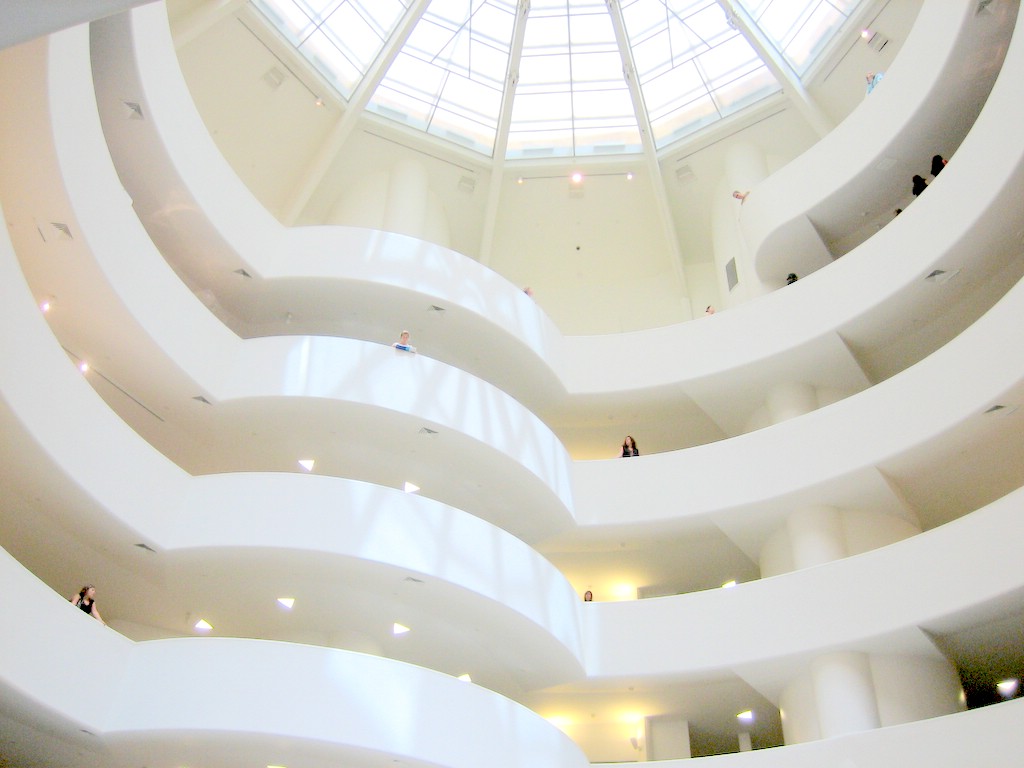
Image credit: Guggenheim Museum, New York City, by gomattolson, via Wikimedia Commons

Thursday, February 14, 2013

A valentine to the Applied Biosystems Veriti® Thermal Cycler


I can grow very attached to PCR machines. A large part of my undergraduate thesis revolved around running PCRs on Applied Biosystems machines and I was trained from a very young age to be very picky about where I put my reactions. After a few years of struggling with the lack of reliability and availability of the Bio-Rad Tetrads® we have in my post-doc lab, I just bought a couple of Applied Biosystems Veriti® Thermal Cyclers from Life Technologies. Granted it's just been a week and I'm still in that happy and dazed phase, but I can barely contain my excitement.

You know how as a child you see things adults have, and as a grown-up you buy the same things so that you feel like an adult? PCR machines are it for me: a lab is not a lab without one. We demoed a Veriti® last Fall and really liked it, then got an offer that we couldn't refuse with a bonus on the 2-for-1 end-of-year special, which made them really affordable.

What is so special? Well, first of all, as you can find in a handy video here, the Veriti® is really easy to use, you plug it in and 5 minutes later you are running your samples. The interface is completely intuitive and the touchscreen is very responsive. THEN, with the VeriFlex™ block you can use 6 separate temperatures for two 8-well strips at a time. This means not only that you can run a precise gradient to test your conditions, but also that you can run multiple reactions at different melting temperatures as long as the extension is the same. We tried both these things with our very difficult genotyping reaction and I almost wanted to cry it was so beautiful. We ran both the wild-type and knock-out reactions on the same block with a 50 and a 58 degree melting temp at each end and everything worked. Since some of our more complex breeding needs up to 4 different PCRs to capture all the alleles, we would be able to run everything at the same time on 1 or 2 machines. We have not tested neighboring strips yet for consistency and interference. They claim you can do completely different temperatures, but we just built a consecutive step gradient and used opposite ends so far.

Finally, apparently you can plug the machine into the Internet and there is software available so that you can run it remotely or have it send you an email when the reaction is done. This is a little creepy. I'm not sure I want a thermocycler to have that much control over my life, but it could be a handy feature if you are doing a lot of things and tend to forget, or if you're going out for dinner and want to know when to get back to the lab. Though I think the 4-10 degree hold should be sufficient for that...DNA is pretty stable....

Remember to look at the Lab-things we like page for more products and reviews.

Saturday, February 9, 2013

Submitting your R00 proposal to transfer your K99 to your new job: a survival guide

You were awarded a K99/R00 Transition to Independence award from the National Institutes of Health (NIH) and you even have a tenure-track job lined up!! You have survived writing your K99 and you think you got this whole NIH thing down. Think again...

The K99/R00 is an wonderful initiative that helps young investigators in training to complete their postdocs and transition to an independent position with almost as much money as a second start-up. You are NIH funded which increases your chances of getting a job in the first place, but the NIH never makes up codes in vain and the name K99/R00 means that you actually have to apply for the R00 portion.

If you have done your homework, you have talked to your Program Official at the NIH throughout your job negotiation process and have had them review and approve the terms of your job offer. In fact, they have helped you define what those terms should be so that they comply with the rules and regulations attached to your NIH funding, in the sense that no institution can shortchange you because you already have a K99. I have a lag of almost a year between signing an offer and starting my job, but 6 months before my move, my PO already had me thinking about the transition. The Program Announcement (PA-16-077 as of May 2016) states that "The application for the R00 phase of the award must be submitted no later than 2 months prior to the proposed activation date of the R00 award by the R00 phase grantee organization." However, as always you have to BUDGET TIME well in advance, because since you're not at your new institution yet, everything will take twice as long.

This is what you R00 application should include, with added suggestions from what I just went through:
  • A new face page signed by the R00 phase institutional representative. This is pretty straightforward and Sponsored Programs at your new institution will do, but remember there may be hoops, multiple signatures may need to be collected, last minute questions that send you scrambling from answers, and NIH regulations require everyone on the grant to be trained on Financial Conflict of Interest and to sign disclaimers (which you may have done at your current institution, but need to redo for the new one, so say goodbye to an afternoon).
  • A new project description page (the project summary or abstract should be updated to reflect current plans for the R00 phase). This is fine, just update.
  • Detailed budget pages for a non-modular budget. This is uncharted territory for non-budget savvy and it took me almost 2 full days with the help of a very responsive administrator, despite the fact that I had templates to follow. The K99 budget is very easy, but the R00 includes salaries, equipment, supplies, animals and other odd and ends like publications and travel, and you need to think about it to justify every single dime. You need quotes for equipment, updated amounts for salaries and fringe, estimates for animal costs and supplies. It's one thing if you're there and you can sit next to someone and go through the numbers with them, but if you're not, it can take a while. Also see this post for salary percentage negotiations.
  • Biographical sketches. Just update, but remember that if you already have personnel listed on the grant, they'll need biosketches too.
  • Other support. Just update.
  • A new Resources page. Ha! This was a piece of cake at your postdoc institution, where you just copied your boss' R01. At the new place you have to figure out what's in the cores, where exactly is the equipment you know is there and what kind of access you are going to have. Your facility needs may not be same as those of other people, so you either get multiple lists or you have to rely on multiple people to give you tidbits of information. And again, you are not there. I was lucky as everyone was extremely helpful, but I had friends who had to fly back to the new place and gather everything that they needed in person.
  • A brief description of progress made during the K99 phase that will serve as the Final Progress Report for the K99 phase. If you did a Year 1 report, it's the same format as described in the Program Announcement, but just a final report. You better have done some of the work, because I heard the NIH can give you grief if you have not actually worked on the project.
  • A final evaluation statement by the K99 phase mentor. Nice long letter detailing how wonderful you are and all the mentoring you received during the mentoring phase. Basically take the mentoring plan and rewrite it in the past tense.
  • An updated research plan (the specific aims should be updated to reflect current plans for the R00 phase and the updated research plan should be briefly described in less than 5 pages). I heard conflicting reports on this: some people submitted a slightly modified version of the K99 proposal continuing on that work and some had to do a major overhaul which is equivalent to writing a new grant. I did a pretty substantial rewrite adding new experiments to follow up the old Specific Aims, so it was time consuming. In general I find short formats much more difficult to write and 5 pages for Significance, Innovation, and Approach including Preliminary Data is not much.
  • A letter from the R00 Department or Division Chairman describing the R00 institution's commitment to the candidate and plans for his/her career development. This is similar to the institutional commitment letter for the K99 portion, but it should relate to your new institution. It should also detail the search process to get to you as the best candidate for the position, describe your hiring package and the faculty development programs at the new place. Chairs are busy...letters take time.
  • A new checklist. Sponsored Programs will do when they assemble the application.
  • IACUC or IRB approval. If you work with vertebrates or humans they will ask you for your protocol approval. If you are like most people you will not have started these in advance, but beware since they may hold up your grant until these are approved, which could mean another couple of months.
A friend told me it took much longer that she had anticipated and she was absolutely right. You are getting ready to leave and you have a million and a half things to do in the lab, in addition to dealing with moving your personal life somewhere else. It is true that the R00 is reviewed internally and it's not going to a study section, BUT it's still a major NIH grant and you are asking the government for $750,000, so it should be done well.  Also remember a little known secret, the unspent part of your K99 will go away if you transition earlier than the 2 years, so be warned.

I'll follow up on what happens with my application. Remember to visit the Writing Grants page for more posts and links.
Note: around 5 weeks after submission my R00 was approved with flying colors....and no funding was cut because of sequestration! 

Saturday, February 2, 2013

Some things I've learned from communication breakdowns

In the past few months we have had a few major communication breakdowns that severely affected a part of the project. Experiments were working erratically and when we started troubleshooting, we discovered multiple issues. Standard operating procedures were not set up correctly or changed because of outside advice and experiments were conducted in a sub-optimal (or not greatly controlled) way. Reagents were not working as they used to, but nobody noticed or thought that it was important to mention it and get it rectified. All this cost money, long hours of work to do the experiments in the first place and more hours to perform controls to figure out what was happening, call companies to discuss reagent issues, and it eventually delayed the completion of our project.

The breakdown of communication happened at multiple levels:

1) Incomplete Pass: I, in the first place, ignored one of the most common advice given to a new investigator: "Your hires are not you". I assumed wrongly that something was obvious, because it was obvious TO ME, when in reality it was not obvious for the person asked to perform the task. I did not double check the protocol or personally follow the experiment the first time. I trusted the trainee with a new task and the task was performed wrongly for a couple of months until someone else came in and saw what was going on. Once that I realized what happened, I could only be angry at myself, because I had made an assumption that they were going to read my mind.

2) Sideways Interference: Someone else recommended a protocol which was used for while and I thought my protocol was being used. The new protocol missed a few key steps which could have led to the observed variability in the results. I had trusted that my protocol was being used and was completely blindsided.

3) Unforeseen Sack: We received a few new reagents in October and I heard that they were not performing perfectly, but it wasn't until I had to run that type of experiment myself in early January, that I realized that there was something terribly wrong. Emails, phone calls, hours of tests and 3 weeks later we figured out what the problem was.
The vendor: Yeah, we've been having issues with it depending on the lot.
The New PI: But I've been using this reagent for 10 years and never had an issue. We compared it with the new, improved and recommended version a few months ago and they were identical.
The vendor: The new version is actually the old formulation because we changed formulations recently and the new one has this problem, but it still has the old name.
The New PI: Ah, I see. Can I return the bad stuff (new formulation/old name) and get some of the good stuff (old formulation/new name)?
The vendor: Sure! Here is a full refund!!
Despite the aggravation, the big problem here is that people noticed something was off, but nothing was done for months, actually making some experiments impossible because the reagent was so off to be unusable for some of our needs.

To continue with the football metaphor: What was wrong with the design of my plays? What is wrong with the team?
Two issues that I can see:
1) My players are rookies. They are learning and show a lot of promise, but they are at that training wheel phase when you can ride a bicycle pretty well and sometimes still lose control when the terrain gets rough. I failed to support them and follow them.
2) My plays need better planning and more coaching. During leadership training, I learned that good leaders have contingency plans and my plans have not been fully worked out yet. Also, I cannot just dole out instructions without making sure that people understand exactly how and why they are doing something. I still need to teach.

I guess I'll never stop learning how to manage people, but these were a few good months of errors to learn from.

Image credit: U.S. Navy photo by Mass Communication Specialist 2nd Class Herbert D. Banks Jr. [Public domain], via Wikimedia Commons

Saturday, January 26, 2013

Millipore SNAP i.d. protein detection system

SNAP i.d. is a vacuum-driven apparatus to block, stain and wash your Western blots. It promises to shorten your time to as little as 30 minutes from the moment you finish your transfer to the moment you are ready for detection. It's definitely a significant improvement from almost 24 hours.

The concept is simple you put your membrane in a special cassette which allows even distribution of liquids, you first put the block on top and the vacuum sucks it through, then you continue with the primary antibody, etc. Blocking takes the time for 30ml of solution to flow through the system and antibody stainings which are done in 3 mL of liquid are 15 minutes. Washes are immediate. There is even a little plastic collector you can put under the cassette to recover your antibody, if you wish.

Does it work? Yes. We were really on the fence on whether we wanted to buy it. At $1,500 it is not cheap, but would it provide such huge time savings to be worth the price? If you are a biochemistry lab working on a finite set of antibodies and repeating the same assays over and over again, absolutely. We calculated the cost per run and since the antibody itself is the most expensive fraction of the cost, the $2 per cassette is quickly compensated by having to use less total antibody (though they recommend 3X concentration). At the end the cost per run is the same with traditional methods than with the SNAP i.d. In addition, cassettes can be reused a few times for the same antibody which would make it even cheaper.

Scilogex Analog Tube Roller
The problem is optimization. Every antibody must be optimized as far as concentration and incubation time. Reviews on the internet (here and here) indicate that sometimes you cannot skip the usual overnight primary incubation because the fast antibody absorption just doesn't work and that you have to play with the antibody concentration because of reduced sensitivity. One possibility we considered is to use it just for secondaries, which would shorten the washes-secondary-washes portion to 20 minutes instead of 3 hours.

As a new lab, I decided to pass for the moment because the upfront cost and the cost of consumables does not justify the expense. Instead we bought a Scilogex tube roller, which cost around $250, so that we could incubate our primaries in rolling Falcon tubes instead of shaking plastic cassettes cutting down the antibody solution to 2-3mL at the usual concentration, which saves us from using the 3X concentration required from the SNAP i.d. And the thing about the tube roller is that you can use it for a lot of other things. One day when I am rich, I'll buy a SNAP i.d.

Remember to look at the Lab-things we like page for more products and reviews.

Saturday, January 19, 2013

Establishing lab culture in a new lab

Every time a common supply is finished and not reordered, or a common piece of equipment is broken, a little voice goes off in my head "When I have my own lab, this will not happen!". But, will it? And if it does, what do I do about it?

It comes down more generally to the lab culture, that set of rules which will reflect how you like to do science, how the lab will be run, how the lab members will interact with each other and conduct their experiments. A survey published a few months ago in the Harvard Business Review (here) showed how employees would follow a particular culture or strategy only when it originated directly from top management and how middle managers were often powerless to implement change by themselves. I have seen similar situations in multiple occasions, where things will run amok unless the Principal Investigator provides a set of credible boundaries. Lab culture is very important and as a new PI you get to establish and refine your own. It seems that in general lab culture reflects how the PI likes to work whether it's a conscious or unconscious effort, but recognizing the way you like things to be done, making an effort to establish positive culture and/or just to hiring people who will fit nicely in the existing culture can make all the difference.

A good culture promotes cohesiveness and assures you that experiments are done the way you want and with appropriate controls. So, I started thinking about what I would want for my own lab:

COMMON PROTOCOLS AND REAGENTS: I have worked in labs where you could not deviate from protocols currently used and labs where everyone had their own protocols, reagents, sometimes equipment and you could even choose whether you'd prefer to run your DNA gels with TBE or TAE. As a small lab having common reagents is a must and I believe maintaining common stocks promotes responsibility towards your fellow lab members. I also think there should be a reference folder with common protocols, which everyone can access. At the same time, protocols are often in flux as improvements and new reagents are used, so innovation must be taken into account and people have to be free to change and provide updated versions of common protocols. The risk of an extremely individualized environment is the complete loss of knowledge (and custom reagents) once an lab member leaves.

Image appropriately taken from a BLOTTR article on copyright
SHARING DATA AND IDEAS: There are lines of research where you can be 2 years ahead of everyone else and others where you could have toiled for 5 years to get to a major finding that someone else can reproduce in 2 weeks, so when and what to share is sometimes a tough decision. Personally I prefer being in an environment open to sharing information, because I believe results will come faster if you can work with others, discuss ideas and involve collaborators. I have been in situations where I had to think long and hard before sharing a piece of data and where multiple emails of mutual assurances of honesty had to cross before data was shared with me. I look at it like running a small business: if you work retail, you factor a percentage of your profits lost to theft, and if you provide a service, there will be cases where you won't get paid and you won't be able to recover the loss. It is fundamentally the same in science: some people will steal your ideas and run with them, it's a fact. I just do not believe that this should stop you from sharing, since talking about your work, being part of a community, collaborating and discussing your results are some of the best parts of being a scientists, at least for me. For this reason I will be completely open to sharing and will push my people to do the same within the lab and outside.

WORKING TOGETHER: I am very gregarious, yet in the lab I am a loner. I have always worked alone on my own ideas, which sometimes made much slower and less productive than I would have wanted because there was simply too much work to do for a single person. Now that I have people working for me, everything goes so much faster and constant interactions allow us to keep asking the right questions instead of just plodding along. On the other hand, working in teams in the lab can lead to a lot of conflict if the team structure is not correct: two lead postdocs on the same project can be a recipe for disaster because of authorship attribution. So I am going to promote a combination of independence and teamwork. It will be good for lab members to help each other and be in each other's papers, but each student and postdoc should have a primary project which is only theirs in addition to a secondary project which is shared.

Now, I just need to figure out how to inventory and share all my protocols and reagents, and how to hire the right people....I see more posts in the future.

Saturday, January 12, 2013

20% protected time to generate new ideas

A laboratory is a factory of innovation which should generate new ideas to move your field forward. As a new Principal Investigator (PI), I have to decide how to drive the advancement of my lab. While I have more projects in my head than hands to complete them, how do I teach the members of my lab independence and spur even more innovation?  In a new lab you do not have a lot of grant money or startup to just give away for random pilot projects, but I have always been in labs where I was given complete freedom to work on whatever I wanted, so I never had to deal with a PI imposing a project on me and I shudder at the idea. What if one of your lab peeps comes up with a really cool idea you would have never thought of yourself?

A few months ago I found out about the 20% rule in technology companies, where employees are given 20% of their time (one day a week) to work on whatever they please to keep them engaged and foster innovation. The idea is to give employees the freedom to think independently and without direction, and it is widely applied at Google, leading to the development of tools such as Gmail or software fixes they would not have had time to work on during regular hours (here). Dan Pink discusses this approach at length in his book Drive, where he explores new approaches to increase motivation which I discussed in a previous post. However, Pink was not the first person to mention such a strategy. In speaking with senior PIs at Harvard Medical School during a mentoring session, I found that giving a portion of protected time to their postdocs to develop their own projects is a common strategy: "From 9am to 5pm you work for me, after 5pm you work on whatever you want".  This allows the postdoc to explore new ideas for their own labs which are clearly distinct from the PI's, but at the same time furthers the PI's line of research and supplies data and publications.

Everyone always tells me "Your hires are not you!". Depending on their previous training, not everyone will want to take up the challenge to develop something new and a lot of money may be wasted in trying if the learning curve is not steep enough, which is a serious concern. At the same time it would be great exercise for grad students, and a step towards independence for post-docs. Large labs with vast resources can afford for some people to falter or take 5 years to to develop a new idea, because if 4 out of 15 postdocs generate data for 4 major publications a year, you are still doing exceptionally well. Also, large labs already normally attract very ambitious and independent young scientists looking for the freedom to develop their own ideas. As I have learned from friends and colleagues ahead of me, the new PI must be very careful about how their hires perform and how the money is spent. There are two primary requirements which should be met in a small lab trying the 20% rule: 1) the person given the freedom must be innately independent or have a history of independent thinking; and 2) the PI must be willing to take the time to learn about the new project and provide appropriate guidance.

One more thing to try which may lead to success or doom....

Remember to check out the Management page for more related posts.
Image: Wikimedia Commons

Friday, January 4, 2013

Words of wisdom for 2013: lab management tips

Boston fireworks
I thought I'd start the New Year with a collection of advice I have collected over the past few months. Every time I talk to a senior PI at work or at a conference or even at random dinner parties I ask for some words of wisdom, so here it goes.

1) HIRE SLOWLY. This seems to be the first and most common advice. Don't feel lonely in your empty lab and go hire the first person you can find. The first few hires determine the efficiency and the culture of the lab and the wrong people can sink a lot of money and ruin the energy.

2) HIRE PASSIONATE PEOPLE is a corollary to the first rule. In addition to having a good work ethics, the new hires must be passionate about science or if they are not already scientists, at least be passionate about something so that you can drive their passion for science. Non motivated employees are less productive, while passionate employees will be able to also drive others.

3) YOUR HIRES ARE NOT YOU. This is another very common advice. You cannot expect the same drive, passion and knowledge from everyone you hire. They don't know what you know and they are not supposed to. They may not think like you and have different learning processes. You have to learn to undestand other people's strengths and weakenesses and harness different ways of thinking to spur innovation.

4) COLLABORATE A LOT AND COLLABORATE WISELY. You are small and cannot do as much as you could in the big lab where you might have done your postdoc. Create a network of chosen people you can work with. Good collaborations may be hard to come by, but can be very productive and mean the difference in the level of publication. Budget a lot of time at the beginning to start and manage collaborations.

5) DON'T SAY "NO" FOR THE FIRST 2 YEARS, THEN START SAYING "NO". At first you have to accept every invitation to speak, to write something or to participate in your field because you need to establish yourself and get people to know you. Then after a couple of years you can start saying "No".

6) ENJOY THE START-UP WHILE IT LASTS. or 7) SAVE SOME OF YOUR START-UP FOR A RAINY DAY. #6 and 7 are in stark opposition and I'm not sure which one to pick. I've talked to people who have spent like crazy in the first few years to generate a lot of high profile data and others who have saved part of their start-up funds for 20 years to tie them over in a funding drought. Both approaches make sense and I guess it's like investing and you need to figure out how risk-averse you are.

These are the highlights for now and I will post more once I have new ones (here).